
You'll understand why the PID equation everyone posts about is incomplete and what the missing piece actually is.
You'll be able to read any PID block diagram, including 2DOF structures, and know exactly what each element is doing.
You'll understand what Integrated Error actually measures, why it depends directly on your P and I tuning parameters, and what it tells you about how your controller responds to a load disturbance.
Process Control, Not Control Process: Cutting Through the Smoke of PID Theory
This technical note cuts straight to the mathematics that most PID training skips. This technical note cuts straight to the mathematics that most PID training skips. It walks through both the ISA Standard and Series PID structures, shows why their textbook transfer functions are non-proper and physically unrealizable, and explains how the derivative filter that fixes this was never optional. Not in pneumatic controllers, not in analog electronics, and not in digital systems. From there it covers the Two-Degree-of-Freedom PID, showing why derivative action belongs on the process variable alone and how setpoint weighting handles the rest. The note closes with Shinskey's Integrated Error equation, connecting your P and I tuning parameters directly to how much error accumulates when your loop rejects a load disturbance. Structured around block diagrams you can implement in MATLAB/Simulink, it gives you a complete and honest picture of what the PID algorithm actually is, so when you open a controller faceplate or configure a control block, you know exactly what you are looking at.
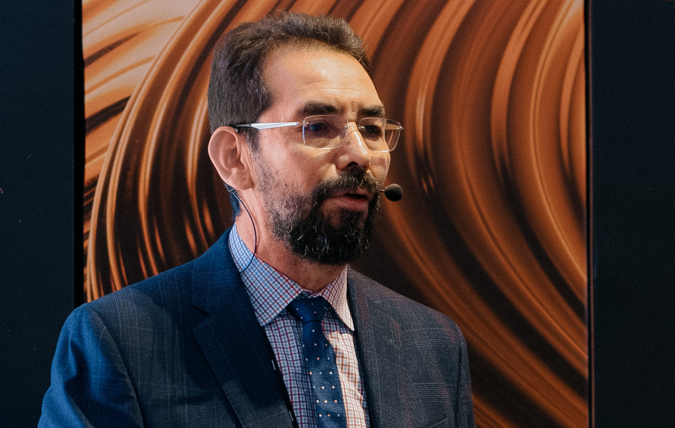
Sigifredo (Sig) Nino
Sigifredo Nino is the founder and president of Summa Control Solutions Inc., where he turns process chaos into stable, efficient, and profitable operations. His career spans fossil power generation, oil refining, petrochemicals, mineral processing, and pulp and paper. He specializes in advanced regulatory control design and commissioning, and in I&C audits that expose what others miss. His optimization work speaks for itself, and these are just two examples. A xylene tower project delivered over $2.5 million per year in energy savings. Dual-composition control on a high-purity benzene-toluene distillation column added more than $1 million annually. These are not estimates. These are results. Beyond the plant floor, Sigifredo co-authored the ISA-5.9 PID Technical Report, contributed a chapter to the Process/Industrial Instruments and Controls Handbook (Sixth Edition), and teaches control theory at both university and industry levels. He is the rare engineer who can derive the equations, commission the loop, and explain both clearly.You said: His optimization work speaks for itself.
What people are saying
Great material. Really really good. Thank you
Instrument Tech
Download the technical note today and start understanding the PID algorithm the way it was always meant to be understood.
If you have ever stared at a PID block, wondered why your loop behaves the way it does, or sat through training that never quite answered your real questions, this is the resource you were not given. It is not another tuning cheat sheet. It is the mathematical foundation, explained honestly, by someone who has applied it across some of the most demanding processes in industry. One download. No subscription. No fluff. Just the clarity you have been looking for
$9.99