These are the main takeaways from this Tech Note:
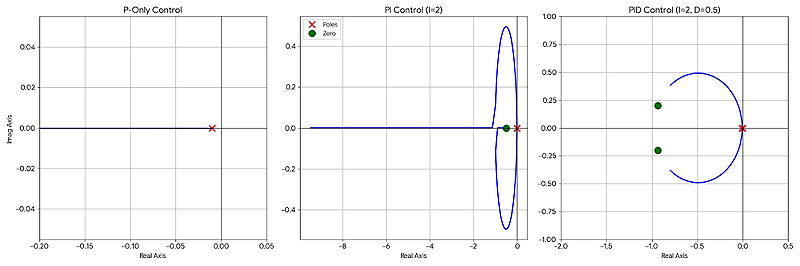
CRITIQUE THE LIMITATIONS OF FIRST-ORDER MODELS Readers will be able to explain why first-order process approximations are theoretically incapable of validating real-world tuning rules that must account for deadtime and secondary lags. APPLY ROOT LOCUS ANALSYS TO PID TUNING Readers will learn to interpret Root Locus plots to visualize how controller Gain, Integral and Derivative Time drive closed-loop poles. RECOGNIZE LIMITATIONS OF ROOT LOCUS Readers will identify that standard Root Locus analysis is restricted to rational transfer functions, making it unsuitable for directly modeling the deadtime (non-rational dynamics) that characterizes real-world chemical processes.

Sigifredo Nino
I am the founder and president of Summa Control Solutions Inc., known for turning complex plants into stable, efficient, and profitable operations. My experience spans fossil power generation, oil refining, petrochemicals, mineral processing, and pulp & paper. I specialize in the design and commissioning of advanced regulatory control and in conducting I&C audits, blending real‑world practice with sound control theory. My optimization work has delivered significant, measurable impact, such as more than $2.5 million per year in energy savings from xylene‑tower optimization and over $1 million annually through dual‑composition control in high‑purity benzene–toluene distillation. An accomplished educator and author, I teach university and industry courses and co‑authored the ISA‑5.9 PID Technical Report. I also contributed a chapter to the Process/Industrial Instruments and Controls Handbook, Sixth Edition
First-order models are unconditionally stable. Your plant is not. Discover why simplified simulations hide the real causes of instability Learn to stop being misled by them.
$9.99